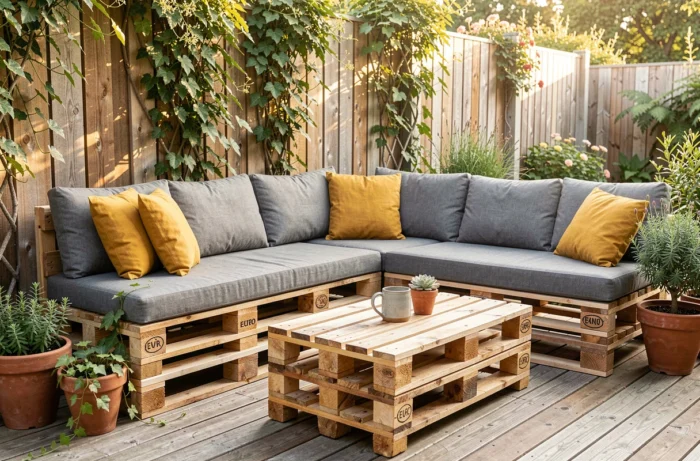
Picking up a few pallets to make garden seating seems like a simple idea. It is, as long as you don’t mistake a pallet ready to be discarded for one that is still part of a return scheme, and you choose wood that will genuinely stand up to the seasons. Most tutorials focus on assembly, but the furniture’s longevity depends on decisions made well before the first screw is driven in.
How long does a pallet sofa last compared with second-hand outdoor furniture?
Have you ever seen a pallet sofa turn grey and warp after two winters outdoors? The problem rarely lies with the assembly. It comes down to the wood itself and its exposure to the elements.
Standard pallets are made from softwood (pine or spruce). Without protection, these types of wood deteriorate quickly when left damp for long periods. The parts in contact with the ground, or where water collects, are the first to suffer. Oil or wood stain protects the surface, but it won’t turn unsuitable wood into durable wood.
Wood durability classes are useful to understand here: untreated softwood is suitable for sheltered use, not for a terrace exposed to the elements all year round.
By comparison, a second-hand garden set made from acacia, teak or aluminium, found for a few dozen euros on a resale site, was often designed to withstand the weather. Its purchase price may be close to the total budget for a pallet project (wood, screws, sanding, finish and cushions).
This doesn’t mean pallets are a bad choice. It means adapting the project: shelter the sofa under a canopy, bring it indoors for winter, or accept that you’ll need to sand and refinish the surface every spring. The right choice depends on how you’ll actually use the furniture.
Choosing the right pallet for an outdoor wooden sofa
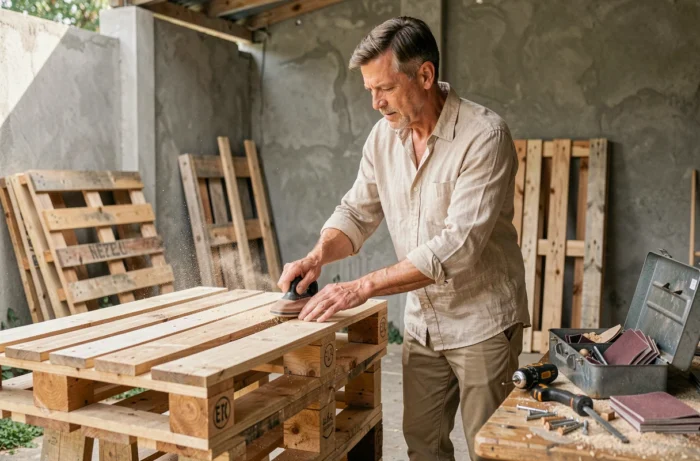
The markings stamped on the wood provide information, but not what you might think. The HT (Heat Treatment) mark indicates that the pallet has been heat-treated to protect against pests. The HT mark does not certify that the wood is clean or suitable for furniture. It tells you nothing about what the boards may have absorbed during storage or transport.
The ISPM 15 mark, meanwhile, relates to the phytosanitary treatment of wood packaging used in international trade. It has nothing to do with rain resistance or whether the wood is suitable for making garden seating.
Building a sturdy outdoor pallet sofa starts with careful sorting. Here are the practical checks to make before taking a pallet:
- Reject any board that is stained, soaked with oil or has a suspicious smell, even if it bears the HT mark.
- Choose one-way pallets (not returnable pallets) that are genuinely intended for disposal. Returnable pallets remain part of a logistics return system, and taking them deprives that system of reusable packaging.
- Check for protruding rusty nails and inspect the runners: wood that is already split or mouldy on the surface isn’t worth the sanding effort.
- Choose thick boards without split knots for the seat, which needs to support the users’ weight.
Designing a pallet sofa: choices that extend its lifespan
How the sofa is built affects its longevity just as much as the surface treatment. Two simple principles make all the difference.
Raise the wood and allow it to breathe
Raising the sofa and preventing water from collecting beneath the pallets helps limit deterioration. A few centimetres of ground clearance, created with screw-on feet or blocks, is enough to allow natural airflow. Persistent damp is the main enemy of softwood outdoors—not rain itself.
On a wooden deck or paved surface, there’s no point putting geotextile fabric between the ground and the frame. What matters is allowing air to circulate beneath the seat after every shower.
Use fixings that allow you to take it apart
A pallet sofa assembled with screws rather than nails can be dismantled at the end of the season. Storing the seat under cover for winter can double its lifespan without any extra effort. Stainless steel or zinc-plated screws prevent rust, which weakens the joints and stains the wood.
Finishes and cushions for a comfortable pallet garden set
Sanding is the longest step—the one nobody wants to do, and the one that determines how comfortable the finished sofa will be. Start with 80-grit sandpaper to remove rough spots, then use 120-grit to smooth the surface: two passes are enough. Sanding each board before assembly is quicker than doing it afterwards.
For protection, there are two practical options:
- Outdoor wood oil (linseed, tung or a specialist decking oil), reapplied every year. It nourishes the wood without forming a film that can peel.
- Tinted wood stain, which provides UV protection and a more finished look, but requires light sanding before each new coat.
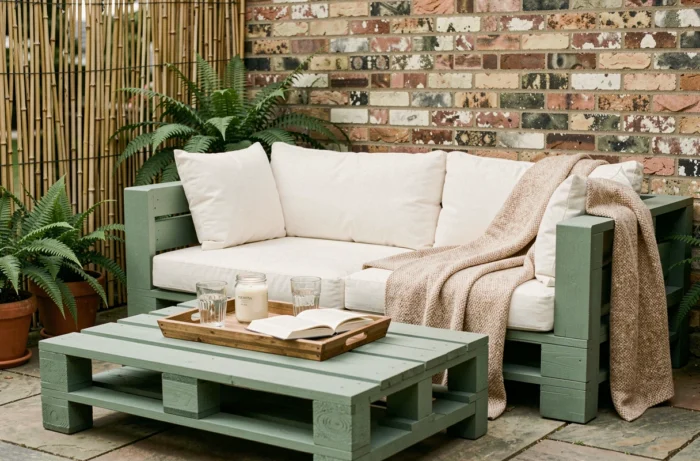
Cushions are what turn a decorative piece of furniture into a proper seat. Water-repellent fabric and foam dense enough to hold its shape after a few weeks are essential. Choose removable, washable covers so you don’t have to replace the cushions every season. Bringing them indoors after each use will help them last far more than a waterproofing treatment.
Cushions often account for half the total project cost. Cutting corners here means building furniture you won’t actually use.
A successful pallet sofa isn’t the one that costs the least. It’s the one made with carefully selected wood, a well-ventilated frame and finishes suited to the conditions it will actually face. Make the right choices, and the result can hold its own against store-bought garden furniture—for a fraction of the price, with the added satisfaction of having built it yourself.