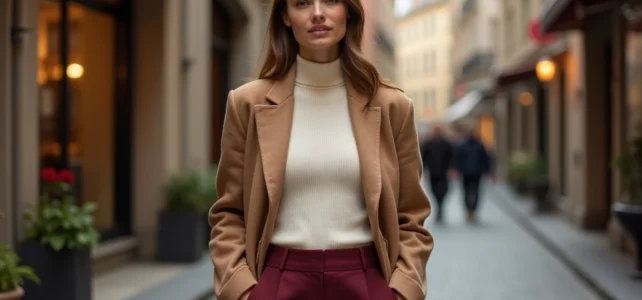
The autumn-winter 2026-2027 shows have delivered their proposals, and the runways are shaping a wardrobe that is more contrasted than in previous seasons. The fashion trends of this season oscillate between bold silhouettes and materials designed to last, in a context where French regulations are starting to weigh on the choices of brands and buyers alike.
Ecological penalty and sustainable fashion: what the September 2026 law changes
Since September 1, 2026, France has implemented an anti-fast fashion law that imposes an ecological penalty on clothing deemed non-sustainable. Penalties range from 0.25 to 12 euros per item, calculated according to environmental impact and durability criteria.
This regulatory framework has a direct effect on the available offerings in stores and online. Mid-range brands are adjusting their collections to avoid extra costs, which pushes low-impact materials to the forefront. Linen, organic cotton, and recycled cashmere are no longer reserved for activist brands: they are becoming common choices in seasonal wardrobes.
To follow fashion trends on CM 35, this upgrade of natural fibers represents a concrete turning point in how to build a personal style. The composition of a garment (at least half of natural fibers, according to recent buying guides) becomes a criterion of visual quality as much as ethical.

Saturated colors and dopamine dressing: the palette replacing pastels
The pastel palettes and neon colors that dominated spring-summer 2025 are giving way. Several fashion analyses for 2026 describe a shift towards dopamine dressing, a chromatic approach that focuses on saturated and bold colors worn in blocks.
The principle is simple: choose a bright color (deep red, electric blue, saffron yellow) and wear it as the main piece rather than as a discreet accessory. This is not an absolute novelty, but the difference this season lies in how designers integrate these colors into structured cuts, far from relaxed streetwear.
How to integrate color without overwhelming a look
The trap of dopamine dressing is accumulation. Wearing three saturated pieces simultaneously rarely produces the desired effect. Field feedback varies on this point, but an effective approach is to limit the strong color to one piece per outfit and anchor it in neutral basics (black, off-white, beige).
A colorful dress worn with understated accessories is enough to create a sharp contrast. Conversely, a neutral suit elevated by a bag or shoes in a bright color produces the same effect without the risk of visual saturation.
Natural fibers as markers of premium style
Materials tell as much of a story as a cut or color. This season, linen, organic cotton, and recycled cashmere function as discreet markers of premium style. Mid-range online stores highlight these fibers not only for their ethical dimension but also because they produce a drape and texture that synthetic materials cannot replicate.
This shift has practical consequences on how to choose seasonal clothing:
- Check the composition on the label before purchase, targeting at least half natural fibers to ensure a durable visual effect
- Prioritize pieces whose material justifies the price rather than multiplying low-cost purchases, now penalized by the ecological penalty
- Test the touch and drape in-store when possible, as well-woven linen or dense organic cotton immediately stands out from low-quality fabric
This material criterion also alters the notion of trend. A garment made of natural fiber can last through several seasons without losing its shape, making the investment more coherent than an impulsive purchase of a trendy piece for a few weeks.
Building a unique style this season: cuts and silhouettes to watch
The autumn-winter 2026-2027 shows display silhouettes that play on contrasts of volume. Sophisticated layering is making a comeback, but with a demand for clarity that previous seasons did not impose as clearly.
Mastered layering rather than piling
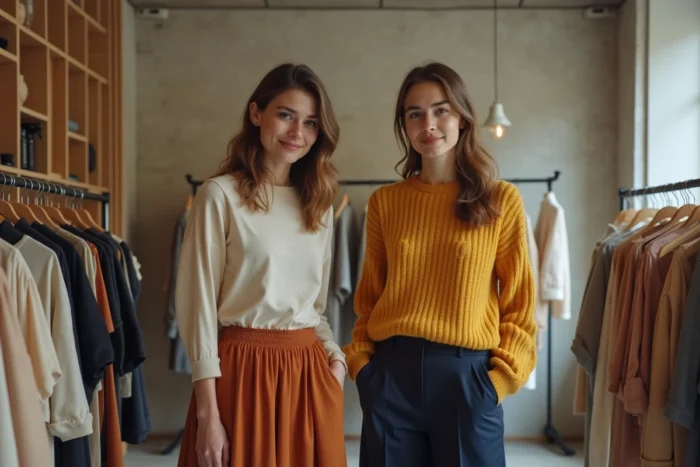
Layering does not mean accumulating. The proposals seen on the runways combine a structured piece (blazer, fitted coat) with a fluid layer underneath (silk shirt, thin sweater). The result relies on a contrast of textures rather than a contrast of volumes.
In practice, this requires thinking of each layer as visible. A shirt collar peeking out from a crew neck sweater, a sleeve slightly longer than that of the blazer: these details construct a silhouette without weighing down the outfit.
Dresses and suits: two complementary registers
The dress remains a strong piece of the season, worn in a midi version with materials that hold up to the cold (blended wool, thick knit). Suits, on the other hand, come in softer cuts than the rigid versions of past seasons.
These two registers share a common point: the cut takes precedence over ornamentation. Embroidery and spectacular prints are less present than expected. Designers are focusing more on the precision of the shoulder line, the length of the skirt, or the proportion between the top and bottom.
The season ahead offers a wardrobe where the choice of materials weighs as much as the choice of shapes. Between the regulatory framework of the ecological penalty and the return of bold colors on clean cuts, the autumn-winter 2026-2027 fashion trends outline a style that gains in clarity. Betting on a few well-chosen pieces, made of natural fibers and in bold shades, remains the most direct way to build a personal look this season.