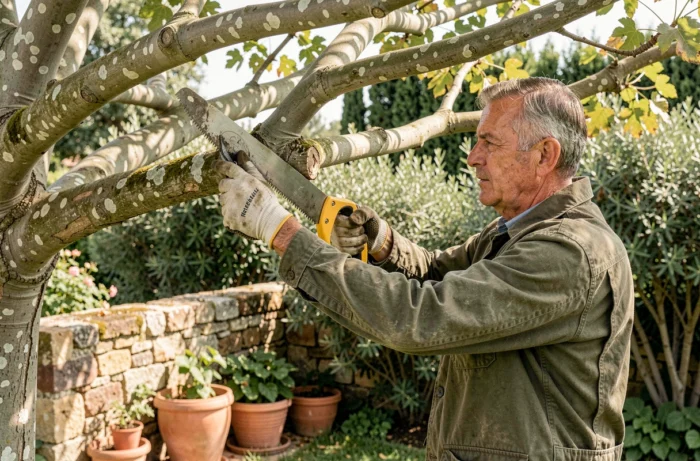
A plane tree mulberry (Morus kagayamae) can grow more than 60 cm per year and turn a shaded terrace into a tangle of branches in just two seasons. Pruning this tree is not just about shortening what overhangs: the timing, intensity of cuts, and preparation shape the canopy as well as the health of the tree. What parameters distinguish a successful pruning from an intervention that weakens the tree or violates regulations on nesting wildlife?
Pruning schedule for the plane tree mulberry: compared periods and legal constraints
The choice of intervention date is based on two criteria that do not always coincide: the tree’s vegetative rest and the birds’ nesting period.
| Period | Tree State | Nesting | Recommended Pruning |
|---|---|---|---|
| November – mid-March | Vegetative rest, sap down | No activity | Structural or severe pruning |
| Mid-March – end of August | Budding then full vegetation | Possible active nests | Avoid (LPO recommendations, November 2023) |
| September – October | Slowdown, leaves still present | Nesting completed | Light maintenance pruning |
The LPO and several local authorities (City of Garches, September 2026) remind us that the destruction of a nest or eggs of wild birds is prohibited, even on private property. Before any cuts between March and August, a visual inspection of the branches is necessary.
For farms subject to the CAP, the ban on hedge trimming runs from March 16 to August 15. This rule does not automatically apply to a solitary mulberry in a private garden, but the presence of an occupied nest constitutes a distinct constraint, valid year-round.
In addition to this schedule, Jardiner Naturellement’s advice details specific precautions for the plane tree mulberry depending on the region and the age of the tree.
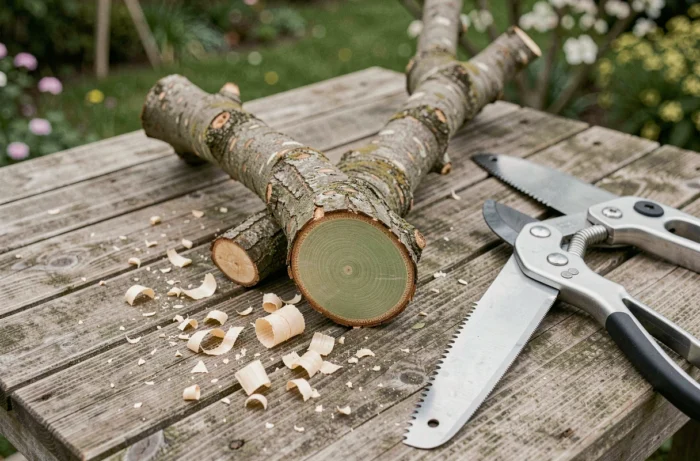
Severe pruning vs. reasoned pruning: what each method produces on the plane tree mulberry
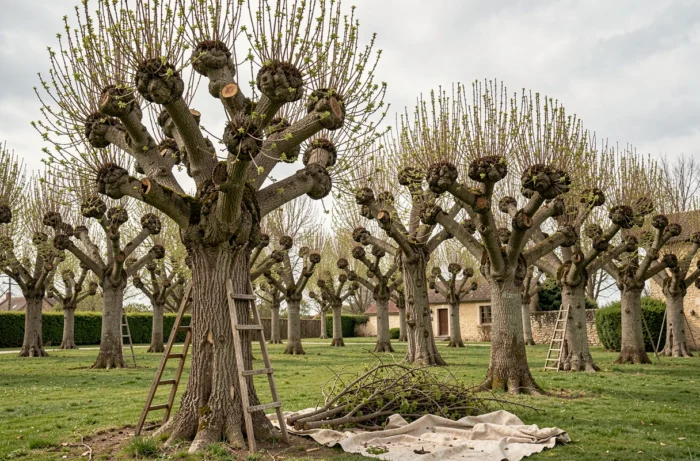
Cutting back the entire crown every winter is a common practice on the plane tree mulberry. It results in a clear visual outcome (the famous cat head), but it triggers a mechanism that many gardeners underestimate.
A severe cut causes a hormonal response: the tree produces numerous, vertical, and vigorous shoots from the cut stubs. These shoots grow faster than the original branches, which necessitates cutting at least as severely the following year. The cut-back-regrowth cycle sustains itself and gradually weakens the attachment points.
Maintaining well-distributed framework branches
The alternative is to maintain a skeleton of main branches and only remove secondary shoots that unbalance the shape. The canopy remains wider, the shade more consistent, and the cut wounds are smaller in diameter, which limits the entry of pathogens.
- Identify three to five framework branches arranged in a fan shape and retain them from year to year
- Remove shoots that cross in the center of the crown or grow downward
- Shorten lateral shoots to two or three buds above the framework branch to maintain the parasol shape
- Eliminate dead wood and branches whose diameter exceeds one-third of that of the trunk, as a cut at this stage heals poorly
This method requires a bit more discernment than total cutting back, but it reduces the volume of pruning needed each season.
Inspection before pruning: cavities, health status, and wildlife
A plane tree mulberry a few years old quickly develops cavities in the stubs left by previous prunings. These hollows can harbor beneficial insects, bats, or cavity-nesting birds.
Before climbing the tree or positioning a pole pruner, a complete tour of the canopy allows you to spot the following:
- Visible nests or concentrated droppings on a branch (indicating a regular perch)
- Cavities with nesting debris (feathers, moss, packed twigs)
- Wood-decaying fungi on old cuts, indicating weakened wood that should not be stressed
A stub colonized by a fungus should not be cut back further without assessing the strength of the remaining wood. Cutting into rotten wood creates a wound that will not compartmentalize properly.
Common pruning mistakes on the plane tree mulberry and their consequences
Some mistakes recur systematically, especially on young trees where the temptation to quickly form a parasol leads to cuts that are too early.
Pruning in the first year of planting
A newly planted plane tree mulberry needs to develop its root system. Removing a significant portion of the foliage in the first year reduces the photosynthesis available for rooting. Wait at least two full seasons before any formative pruning to give the tree time to anchor itself.
Cutting during sap rise
Pruning done in April or May, when the sap is actively flowing, causes abundant seepage on the wounds. The mulberry does not “bleed” dangerously like a birch, but the oozing sap attracts insects and promotes the development of opportunistic fungi. The window from November to mid-March remains the safest for structural cuts.
Neglecting tool disinfection
The plane tree mulberry is susceptible to certain fungal diseases transmitted from one tree to another by the blades. A pass with 70° alcohol between each tree, or even between two large cuts on the same tree, limits the spread of pathogens between wounds.
The plane tree mulberry forgives many mistakes due to its natural vigor, but each poorly placed or poorly timed cut creates a problem that accumulates with the next ones. Keeping a noted pruning schedule, with the diameter of cuts made and the condition of the stubs, allows for adjusting the intensity from year to year without repeating the same excesses.