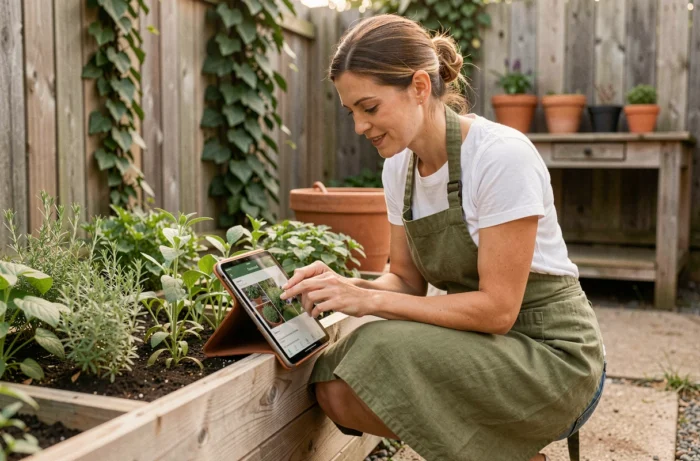
The French gardening market is going through a paradoxical period. Overall sales in gardening and DIY have shown a moderate decline since 2024, but the online channel continues to grow. This divergence between physical and digital commerce is reshaping shopping habits, available tools, and the expectations of consumers who garden.
Decline of the gardening market and rise of e-commerce: two diverging trends
Sector analyses published by FMB/Inoha and echoed by Geoptis and Booper confirm a clear observation: the gardening and DIY market in France has slightly declined during the 2024-2025 period. Physical garden centers are experiencing a drop in foot traffic, exacerbated by budgetary adjustments from households.
In parallel, e-commerce in gardening has now surpassed the 10% mark of the market in France. This share, steadily increasing, reflects a shift in shopping habits towards digital platforms and specialized marketplaces. Editorial gardening sites often discuss the enthusiasm for plants without distinguishing between sales channels, which obscures this structural shift.
This gap between a slightly contracting physical market and a growing digital channel is not trivial. It changes how brands invest, how companies distribute their products, and how gardeners access information. To keep track of these developments over the months, the news on jardinjade.com regularly documents the latest in the sector.
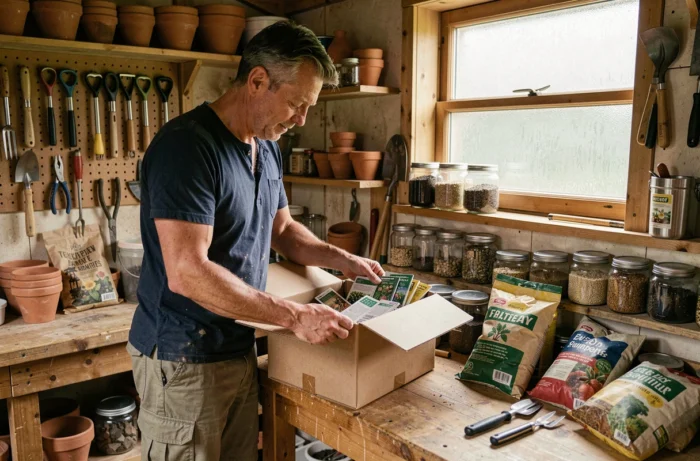
Gardening marketplaces and agency commerce: the new online shopping circuits
The growth of online gardening is not limited to selling potting soils and pruners on generalist sites. Specialized marketplaces are gaining ground by offering targeted catalogs, with filters by soil type, regional climate, or planting season.
A more recent phenomenon deserves attention: so-called “agency commerce.” Artificial intelligence agents are beginning to appear in some online shopping journeys, from recommending plants suited to a specific garden to optimizing shopping carts. The available data does not yet allow for measuring the real impact on the average basket in gardening.
What platforms are changing for amateur gardeners
Wider access to plants via e-commerce raises practical questions. A gardener can order varieties that are unavailable at the local garden center, but the quality of the plant upon receipt remains a frequent point of friction. Online reviews and return policies play an increasingly important role in the purchasing decision.
Historical brands (garden centers, large DIY stores) are responding by developing click-and-collect options and strengthening their presence on comparison sites. The boundary between online and in-store shopping is becoming porous, with hybrid journeys where consumers consult online before visiting, or vice versa.
Sustainability and regulation: what weighs on the online plant offer
The ornamental horticulture sector in France is moving towards more sustainable practices, and this trend is reflected in the online offer. Sector reports highlight a growing consumer interest in locally produced plants, peat-free substrates, and reduced packaging.
The European regulation on phytosanitary passports, mandatory for the sale of plants (including online), adds a layer of constraint for digital sellers. Small nurseries selling by mail must comply with the same requirements as wholesalers, which represents a significant administrative cost.

Online search trends: what gardeners are really typing
Online search data reveals interesting shifts. Gardening-related queries in France show a decline in generic searches (like “how to plant tomatoes”) in favor of more specific queries: varieties suited to a region, permaculture techniques, solutions to drought.
This evolution reflects an increase in the competence of connected gardeners. The content that performs well is no longer basic fact sheets, but in-depth technical guides, product comparisons, and documented user experiences. Specialized media and gardening content creators on social networks are capturing an increasing share of this audience.
Seasonality and dynamic pricing
Seasonality remains a major factor in online price variation in the gardening sector. Seeds, bulbs, and tools see their prices fluctuate significantly between spring and autumn. Some platforms adjust their prices dynamically, similar to the airline industry, based on real-time demand.
This practice, still marginal in the gardening sector, could become widespread with the growing adoption of artificial intelligence tools by e-commerce merchants. Savvy consumers are beginning to compare prices over several weeks before purchasing, replicating habits learned in other e-commerce sectors.
Online gardening is no longer just a digital extension of the neighborhood garden center. It is becoming a complete ecosystem, with its own pricing, regulatory, and content logic.
The share of e-commerce in the French gardening market continues to grow, and AI tools are beginning to change the shopping journey. Gardeners who shop online are becoming more demanding, both regarding the quality of delivered plants and the reliability of the information accompanying their choices.